Reconstitution of endogenous repair in severely steatotic liver grafts (DeFat)
Liver transplantation remains the only curative treatment for end-stage liver disease, yet the number of suitable donor organs continues to fall short of clinical demand. One major strategy to expand the donor pool is the use of extended criteria donor (ECD) organs, which often present with elevated risk factors such as macrovesicular steatosis. Fatty liver grafts are associated with impaired post-transplant function and an increased likelihood of primary non-function, posing significant challenges to successful outcomes.
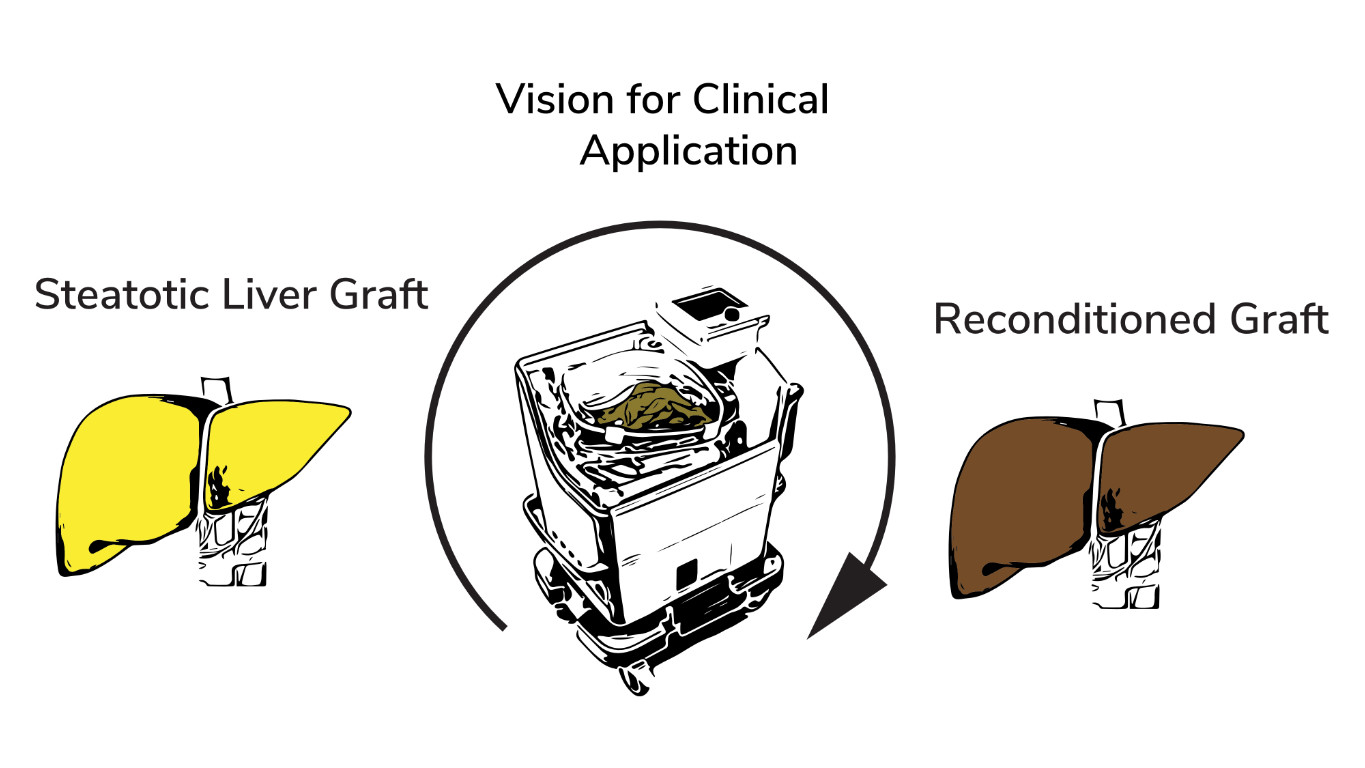
Normothermic machine perfusion (NMP) offers a promising platform for the preservation, assessment, and therapeutic conditioning of marginal grafts under near-physiological conditions. Beyond conventional preservation, NMP enables targeted interventions during ex vivo perfusion, including metabolic reprogramming of steatotic livers.
Our group has developed a defatting approach using mild mitochondrial uncoupling during NMP to reduce intrahepatic fat content in steatotic rat liver grafts. This strategy has proven safe and effective in reducing steatosis, with encouraging results. While technical limitations currently prevent long-term transplantation experiments in small-animal models, these findings suggest a high potential for clinical translation.
Our ongoing work aims to overcome current limitations in the use of fatty liver grafts and establish NMP-based metabolic reconditioning as a viable pathway to expand the donor organ pool. By making previously unacceptable organs transplantable, this research addresses a growing clinical need and contributes to improving access to life-saving liver transplantation.
Info
- Project lead: Prof. Dr. Nathanael Raschzok
- Team: Dr. Joseph Gaßner, Priv.-Doz. Dr. Simon Moosburner, MHBA, Maximilian Nösser, Julian Michelotto, Kristina Knaub, Linda Gilles, Felix Strobl, Felix Claussen, Maximilian Zimmer, Vanessa Muth
- Duration 2018 - 2024
- Funding: Deutsche Forschungsgemeinschaft